
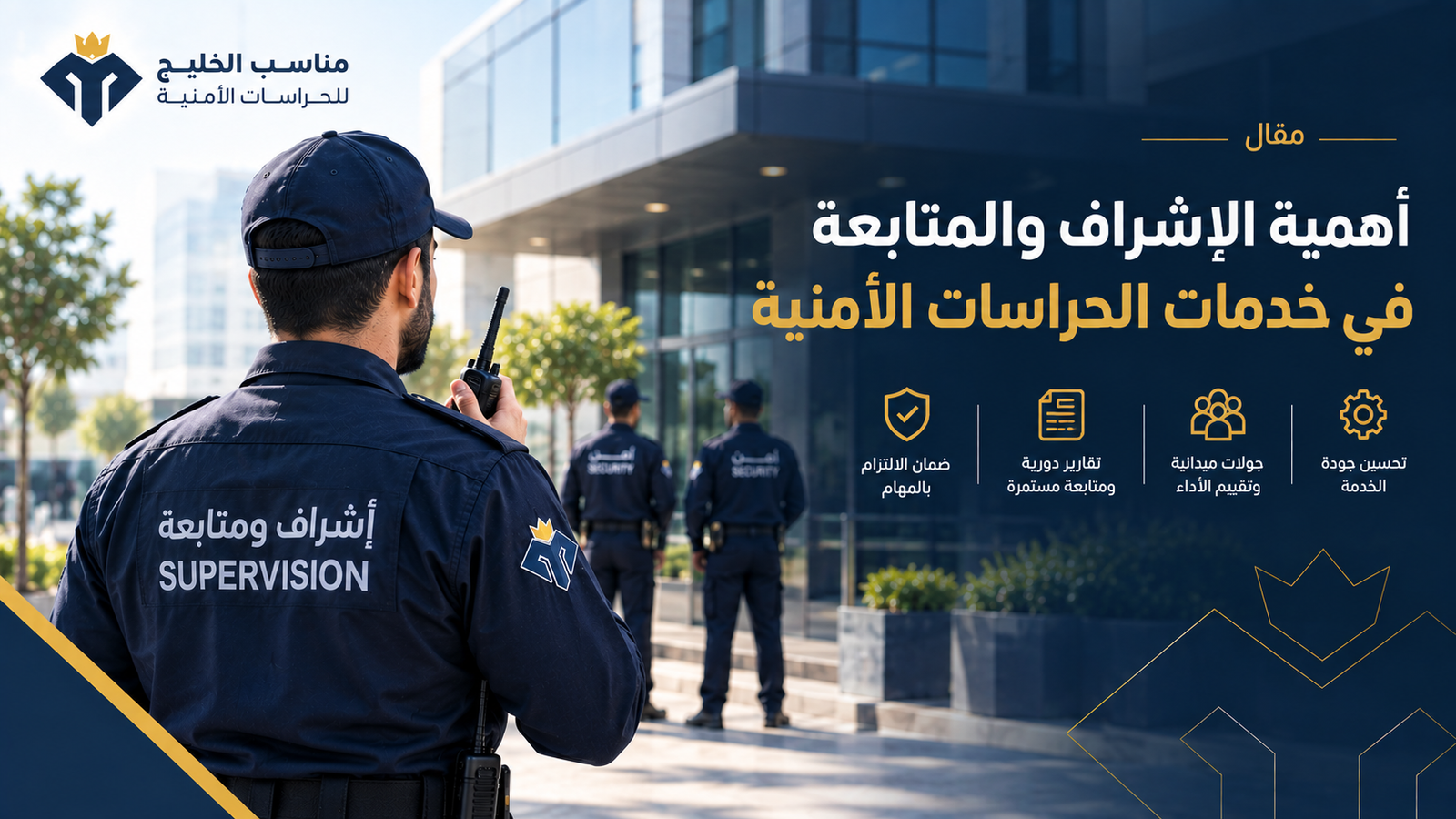
Even well-trained guards need ongoing supervision to ensure duties are carried out, observations are reported, and operational challenges are addressed.
What Do Supervision and Monitoring Mean in Security Guarding?
Supervision and monitoring are procedures for assessing guards' performance and verifying compliance with the site's operational plan and approved instructions.
They may include:
- Checking attendance and discipline.
- Verifying staffing at assigned posts.
- Reviewing daily duties.
- Following up on incidents and observations.
- Conducting field visits.
- Reviewing security reports.
- Communicating with facility management.
- Taking corrective action when required.
Why Is Supervision Important in Security Services?
1. Ensuring Compliance With Duties
Every facility has different duties and procedures. Regular supervision ensures that access control, patrols, and monitoring of designated areas are performed as required.
2. Improving Performance Quality
Continuous monitoring identifies strengths and opportunities for improvement. Addressing issues consistently helps improve performance and sustain service quality.
3. Responding Promptly to Observations
Issues may arise concerning the site, visitor flow, access procedures, or guard deployment. An attentive supervisor can escalate observations to the responsible parties for action under approved procedures.
4. Improving Communication With Facility Management
A clearly defined supervisory contact simplifies communication and ensures observations follow established channels until they are resolved.
What Does a Security Supervisor Do?
The supervisor's responsibilities vary by project and service scope, but the role typically connects guards, the security company, and facility management.
Common responsibilities include:
- Monitoring guards in the field.
- Checking compliance with instructions.
- Supervising guard deployment.
- Reviewing daily observations.
- Monitoring attendance and discipline.
- Submitting management reports.
- Following up on matters requiring action.
- Confirming implementation of the operational plan.
The supervisor is responsible not only for overseeing guards but also for monitoring service quality and its fit with site needs.
Security Reports and Their Role in Monitoring
Reports document observations and events during working hours. They help facility management and security providers to:
- Review incidents and observations.
- Identify recurring problems.
- Evaluate procedural compliance.
- Take appropriate action.
- Improve operating procedures.
Clear, organized reports support better follow-up and decision-making.
The Importance of Field Monitoring
Reports alone cannot fully assess guarding quality. Field inspections give supervisors a direct view of operations, verify that guards are at their assigned posts, and identify improvement needs.
Site visits also help supervisors recognize operational changes and respond more quickly.
Do All Facilities Need the Same Level of Supervision?
No. Requirements depend on facility size, type of activity, guard numbers, and on-site movement. A large site with multiple entrances and sensitive areas may require more intensive monitoring than a smaller facility.
Monitoring should be tailored to each project, not imposed uniformly across all sites.
The Relationship Between Training and Supervision
Training prepares guards for their duties; supervision verifies that this training is applied in practice. Effective qualification and continuous monitoring together support readiness and performance quality.
How Does Monitoring Improve Security Services?
A continuous improvement cycle can follow these stages:
Observation → Documentation → Evaluation → Corrective Action → Follow-up
When an observation is recorded, analyzed, addressed, and reviewed, supervision becomes a tool for improvement rather than merely performance control.
Manas Gulf Security
Manas Gulf Security provides guarding, supervision, monitoring, facility protection, crowd management, and event security services tailored to site requirements.
Supervision is an integral part of security operations, supporting performance monitoring, coordination, and the reporting of observations to enhance service quality.
Conclusion
Supervision and monitoring are essential to successful security guard services; simply placing guards on-site is insufficient.
Field visits, reports, and ongoing communication support compliance, identify operational challenges, and improve service quality. Security providers should therefore be assessed not only by guard numbers but also by the supervision and monitoring systems they provide.